App publishing is still more manual than most founders expect. Before users see the app, you may need developer accounts, certificates, store forms, privacy answers, metadata, review notes, and rejection fixes. This guide explains where AI-guided publishing helps today, where autonomous agents may help next, and how to prepare without handing off decisions too early.
The Last Step AI App Builders Don't Solve: Publishing goes deeper on the ideas above and adds concrete next steps.
Why is app publishing still so manual?
AI agents matter in app publishing because the workflow is structured, repetitive, and rule-heavy. Founders usually do not get stuck because they cannot click the right button. They get stuck because each step asks for a judgment about privacy, permissions, metadata, platform policy, or product behavior.
Here is the workflow many teams still repeat before App Store or Google Play approval.
| Publishing stage | Manual publishing today | AI-guided publishing now | Future agent-assisted publishing |
|---|---|---|---|
| Developer accounts | Founder configures roles and access | Assistant explains setup gaps | Agent flags missing roles |
| Code signing | Founder handles certificates, profiles, bundle IDs, and package names | Tool identifies likely signing issues | Agent validates build identity |
| Compliance forms | Founder interprets privacy, safety, rating, and export questions | Assistant drafts answers from app context | Agent prepares drafts with approval gates |
| Store metadata | Founder writes descriptions, keywords, screenshots, and notes | AI drafts and checks completeness | Agent updates metadata by platform |
| Submission | Founder uploads and submits | Checklist reduces missed steps | Agent coordinates steps after approval |
| Rejection handling | Founder reads reviewer notes and searches forums | Assistant explains likely causes | Agent maps rejection to fixes |
| Policy monitoring | Founder reacts to emails and deadlines | Tool highlights relevant warnings | Agent creates app-specific tasks |
The interpretation is practical: publishing contains many tasks that can be structured, checked, and repeated. AI can reduce avoidable errors when it has accurate app context, but it still needs clean inputs and human review.
The business impact is not guaranteed approval. It is a more predictable launch process, fewer repeated mistakes, and a reusable operating record for future releases.
Useful metrics to track include:
- First-submission rejection rate
- Time to resolve each rejection
- Avoidable metadata or compliance fixes
- Time spent searching old forum answers
- Repeated issues across releases
Tools such as Froxi AI, Blitz, AppSurge, and Stora point toward this shift from static publishing documentation to assisted workflows. The current limit is important: these tools can recommend, draft, and explain, but the founder still approves declarations and submits the build.
When you move from outline to execution, Should You Publish Your App Yourself or Hire Someone? helps close common gaps teams hit here.
Where will AI agents help app publishing first?
Autonomous publishing agents will not own the entire release process overnight. They are more likely to start with tasks that are repetitive, evidence-based, and easy to verify.
The useful question is not "Will AI publish my app?" It is "Which publishing tasks can an agent perform safely if I provide clean inputs and approval rules?"
Compliance drafts from real build signals
A publishing agent can inspect an iOS or Android build and draft compliance answers from what it finds. That may include permissions, third-party SDKs, analytics tools, advertising identifiers, login requirements, in-app purchases, and sensitive data flows.
| Build or product signal | Agent output | Human validation required |
|---|---|---|
| Camera, location, contacts, microphone, or photos permissions | Permission rationale drafts | Confirm each permission is necessary |
| Analytics, ads, crash reporting, and attribution SDKs | App Privacy and Data safety drafts | Check backend and vendor behavior |
| Login, accounts, and profile data | Data collection and deletion checklist | Verify deletion flow and policy language |
| In-app purchases, subscriptions, and paywalls | Monetization notes | Confirm claims match the build |
| User-generated or age-sensitive content | Age rating and moderation notes | Review policy and legal risk |
The checkpoint matters. Compliance drafts can reduce missed details, but they do not guarantee legal correctness, platform approval, or accurate privacy disclosure. Before submission, compare the agent's answers against the real product, backend systems, privacy policy, and user commitments.
Store metadata and rejection-risk scoring
Agents can improve listing quality because they can compare product behavior, screenshots, audience, release notes, and platform expectations together.
A useful publishing agent should be able to:
- Draft App Store subtitles, promotional text, keyword fields, release notes, and Google Play descriptions
- Check that screenshots match the actual build
- Flag missing demo credentials, broken paywalls, vague permission explanations, or unsupported account deletion
- Compare listing claims against visible product functionality
- Return a ranked pre-submit fix list
Think of this as a review-readiness signal, not a guarantee. Apple and Google still make the review decision, and reviewers may interpret edge cases differently. The value is reducing avoidable mistakes before you enter the queue.
Policy monitoring after launch
Publishing does not end after approval. Apple and Google update guidelines, target API requirements, SDK policies, privacy expectations, and account deadlines long after the first release.
An agent can monitor changes and map them to affected apps, builds, SDKs, markets, listing claims, or data disclosures. Instead of a vague alert like "Google policy changed," the founder might get a task such as "Review this SDK because it may affect Data safety declarations."
This still needs judgment. Policy monitoring can reduce missed deadlines, but it cannot replace legal review, product review, or platform-specific interpretation for sensitive categories.
A complementary angle worth comparing lives in Froxi AI vs Agencies: Which Gives Founders More Control?.
How can founders make an app agent-ready?
The future of AI in app publishing will not only depend on smarter models. It will depend on cleaner workflows that agents can execute without guessing.
For founders, that means structured inputs, reusable context, and clear human approval gates. Expect a small setup effort now if you want safer automation later.
Create one publishing source of truth
Keep app category, target countries, account roles, bundle ID, package name, build number, SDKs, permissions, data collection, login requirements, monetization model, store assets, demo credentials, support URL, privacy policy URL, release notes, age rating assumptions, and account deletion flow in one place.
Assign an owner and review cadence
A simple version takes about 30 to 60 minutes to set up, then 15 to 30 minutes per release to update. The founder, product lead, or engineering lead should review it before every submission and after any SDK, permission, monetization, or privacy change.
Run a pre-submit validation pass
Compare the source of truth with the actual build, App Store Connect forms, Play Console declarations, screenshots, and privacy policy. The goal is to catch mismatches before the reviewer does.
This does not need to be complex. A spreadsheet, Notion page, or internal release document is enough for most early teams. The tradeoff is discipline: a lightweight system is easy to maintain, but it gets stale quickly if nobody owns it.
For tradeoffs, checklists, and edge cases, Why Publishing Certainty Is More Valuable Than Faster Builds rounds out this section.
Use AI guidance to learn the process, not bypass it
AI-guided publishing is most valuable when it teaches you why a step matters. If you only use it to move faster, you may repeat mistakes without understanding the platform pattern behind them.
| What to do | Why it helps |
|---|---|
| Generate a platform-specific checklist | Avoids generic launch advice |
| Save every rejection cause, fix, and resolution time | Creates memory for future submissions |
| Ask the assistant to justify privacy, metadata, and screenshot recommendations | Helps you understand what a future agent may automate |
| Compare AI suggestions against real product behavior | Prevents polished but inaccurate answers |
The practical takeaway is simple: guided tools are not just convenience. They are preparation for supervision.
Before an agent edits metadata or answers forms, classify publishing tasks into three buckets:
| Agent permission level | Suitable publishing actions |
|---|---|
| May draft | Privacy labels, Data safety answers, permission rationales, metadata, release notes, rejection responses |
| May recommend | Screenshot changes, policy fixes, SDK updates, account-role changes, market readiness issues |
| May execute after approval | Metadata updates, release note changes, checklist completion, submission steps with explicit signoff |
Require human approval for account ownership, organization roles, GDPR, COPPA, HIPAA, privacy declarations, monetization claims, market launches, and final App Store or Google Play submission. Lower-risk work, such as assembling release notes, checking screenshots, flagging missing support links, and monitoring deadlines, can usually be automated earlier.
How to Publish an Emergent-Built Mobile App Successfully reframes the same problem with a slightly different lens - useful before you finalize.
Mistakes, guardrails, and founder checklist
Autonomous agents can reduce operational publishing work. They do not transfer platform, product, or legal accountability away from the founder.
The goal is to use AI to improve review quality, not just submission speed.
| Risk | Why it matters | Practical guardrail |
|---|---|---|
| Treating AI compliance as final | Privacy and safety answers may miss backend or SDK behavior | Require human review before submission |
| Optimizing only for speed | Fast submissions still fail if evidence is weak | Run a review-readiness check first |
| Reusing stale answers | Product, SDK, or policy changes can invalidate old declarations | Refresh the source of truth every release |
| Giving broad account access | Agent or tool errors can affect live listings | Use least-privilege roles and approval gates |
Before your next submission, confirm:
- Permissions match actual feature use
- SDK inventory is current
- Data collection matches the privacy policy
- App Store privacy labels and Google Play Data safety answers are reviewed
- Screenshots match the build
- Demo credentials work
- Release notes match the build
- Support URL is live
- Account deletion flow is available where required
After submission, log every rejection reason, policy warning, fix, resubmission date, approval date, and reviewer note. This turns every review cycle into structured context for future automation.
What founders should expect next
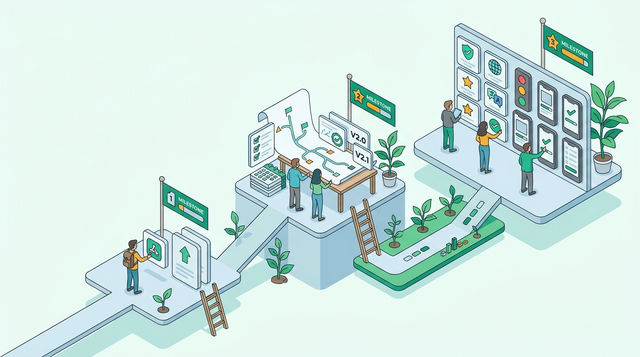
Agent-led publishing will likely arrive in stages. First, agents will draft better checklists, metadata, privacy answers, and rejection responses. Then they will monitor policies and maintain release records. Later, they may coordinate more of the submission workflow with human approval gates.
The constraint is trust. App stores can change policy interpretation, SDK vendors can change behavior, and product teams can ship features that invalidate old declarations. Any agent that touches publishing needs current context, clear permissions, and a human owner for final decisions.
The realistic upside is still meaningful. A founder who maintains a clean publishing record today will be better positioned to use autonomous publishing tools tomorrow, with less cleanup and fewer risky assumptions.