
If you are building a meditation app, the hard part is not recording calming audio or shipping a clean UI. It is getting users to come back and pay without breaking trust.
This guide walks you from a focused first use case to an iOS and Android launch, with a monetization plan that feels fair and converts under real user behavior. It also calls out the operational work that tends to surprise first-time builders.
How to Monetize Your First Mobile App (Step-by-Step) goes deeper on the ideas above and adds concrete next steps.
Early proof: what a monetizable meditation app needs before launch
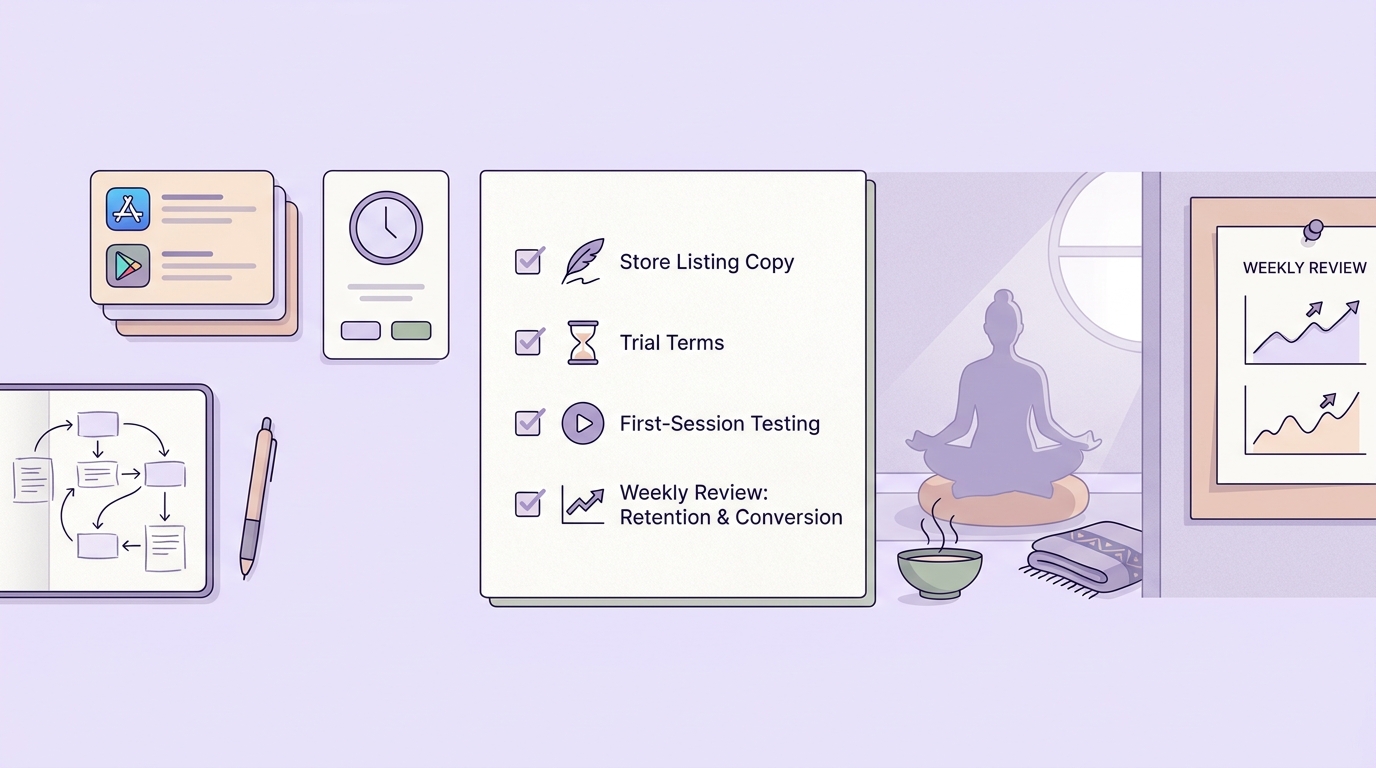
A practical checklist block for meditation app monetization covering store listing copy, trial terms, first-session testing, and weekly review of retention and purchase conversion.
Category: Activation
Statistic: ≥70%
Label: First-session completion rate
Context: If users don’t finish once, more content won’t save retention
Category: Monetization
Statistic: 3 - 8%
Label: Trial-to-paid conversion
Context: Low conversion signals pricing, timing, or first-win value mismatch
Category: Outcomes
Statistic: 38%
Label: First-pass approval rate
Context: When metadata is complete upfront
Public retention writeups suggest even strong meditation apps can see steep drop off, sometimes around 5 percent of users active at day 30 in specific analyses (source). Treat that as directional, not definitive for your niche, acquisition channel, or audience.
| Signal to watch | What it means | Why it impacts revenue |
|---|---|---|
| First-session completion | Onboarding and the first meditation feel easy | More users reach a felt win before seeing pricing |
| 7-day return rate | Users form a habit quickly | You need less paid acquisition to grow |
| Trial-to-paid conversion | Value matches price expectations | Subscription economics become plausible |
Explanation: A reasonable first target is to validate these behaviors with a small release, not to ship a huge library. You can usually learn more from 50 to 200 engaged users than from 200 audios no one finishes.
Interpretation: If first-session completion is low, adding more content rarely fixes the problem. If 7-day return is low, pushing the paywall harder often backfires and can show up as worse reviews and refunds.
Reader impact: These signals help you decide what to do in the next 1-2 weeks of iteration: tighten onboarding, improve the first session, adjust the paywall moment, or slow down and fix audio quality before you spend on acquisition.
When you move from outline to execution, How Much Should You Charge for Your App in 2026? helps close common gaps teams hit here.
Why do meditation apps need both trust and a business model?
People download a meditation app because they want relief fast. They abandon it just as fast if the first session feels salesy, confusing, or low quality.
A good first target is: deliver a calm first win, make the second and third sessions effortless, then monetize in a way that matches what the user already came for.
A few constraints shape everything:
- Users are wary of aggressive paywalls and vague claims, especially in mental health-adjacent products.
- Subscription success depends on ongoing value, which usually means a sustainable content cadence, customer support, and consistent QA.
- App Store and Google Play policies require clear billing language and easy subscription management, so sloppy pricing copy is a real launch risk.
- Some features add real overhead. Offline downloads increase storage, support, and edge cases around file corruption. Personalization can help retention, but it adds data handling, privacy work, and testing burden.
A complementary angle worth comparing lives in The Fastest Way to Make Your First $1,000 From an iOS App.
How do you build a meditation app in the right order?
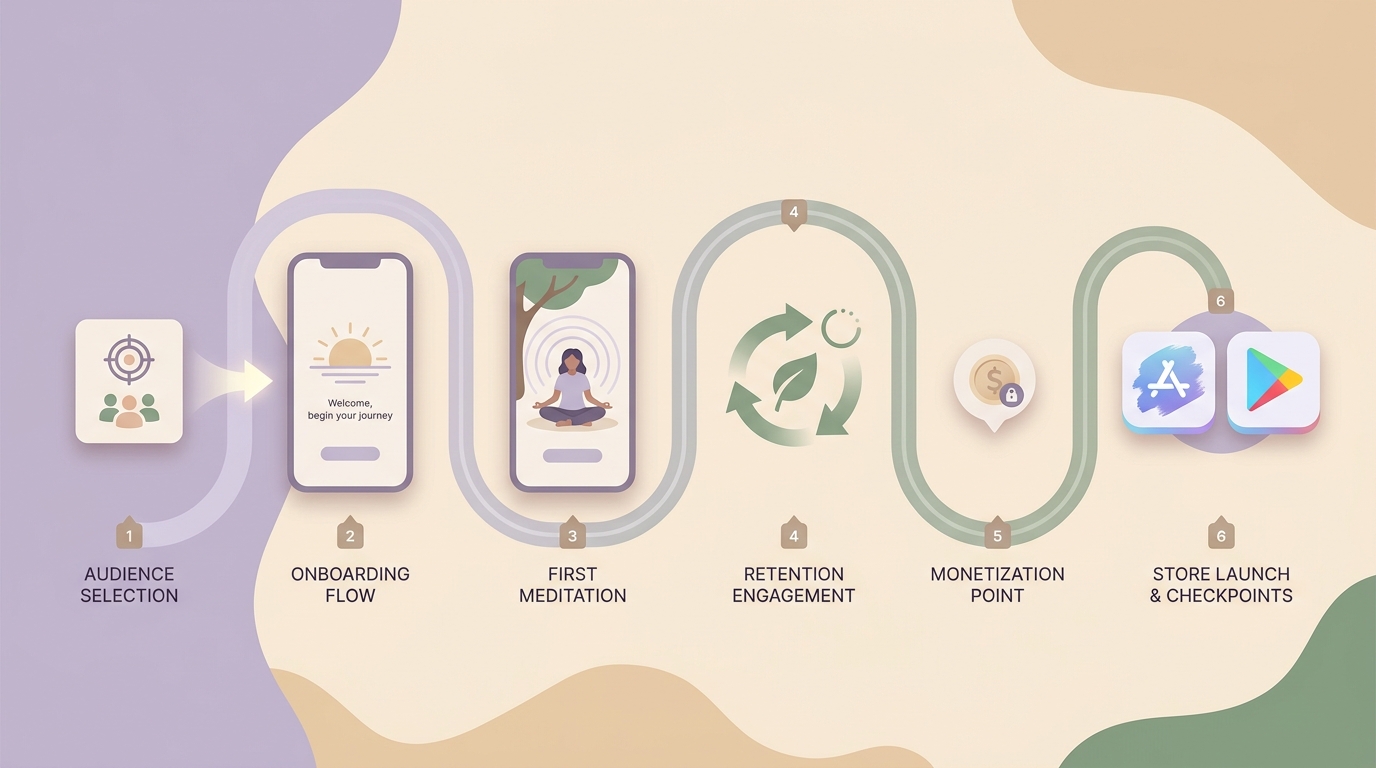
A step-by-step process diagram showing the meditation app flow from audience choice to onboarding, first session, retention loop, and monetization point, with App Store and Google Play launch checkpoints.
1. Pick the first meditation use case and audience
Choose one outcome and one persona
Pick a narrow wedge like sleep for shift workers, anxiety relief for students, or beginner mindfulness for busy parents. Budget real time for this: even a lightweight pass is often 4-10 hours across interviews, review mining, and competitor teardown.
Map the first journey and the first upgrade moment
Define: install - start session - complete - return prompt - habit cue - upgrade. In most cases, avoid placing the paywall before the first session; ask after a felt win like finishing 3 sessions, saving a favorite, or coming back on day 2.
2. Design the core experience around repeat use
- Build the smallest habit loop: guided sessions, a timer, favorites, gentle reminders, simple progress.
- Plan for the boring work: analytics events, subscription plumbing, audio workflow, accessibility, and store compliance often take as long as UI.
- Validate the calm: 5 quick usability tests can surface friction fast, but expect 1-2 days to recruit, run, and apply fixes.
Build time is highly variable. A small team can ship a basic version in a few weeks, but billing QA and store review cycles can stretch timelines, especially if you iterate during submission.
Mini workflow example (what "right order" looks like):
| Step | What the user sees | Where monetization shows up | Metric to watch |
|---|---|---|---|
| Onboarding | Goal choice + 1 optional reminder toggle | No paywall yet | Onboarding completion |
| First session | 5-8 minute guided meditation | No paywall | First-session completion |
| Return trigger | "Continue tomorrow" + gentle reminder | No paywall | Day 2 return |
| First upgrade moment | "Unlock the sleep series + offline" | Paywall after 2-3 completed sessions | Paywall view to start-trial |
| Ongoing use | Favorites, streak, new sessions weekly | Paywall on locked sessions | Trial to paid + churn |
Get the MVP scope map
A one-page plan for what to build first, what to postpone, and what to measure in week one.
Download the scope map
3. Choose the monetization model that matches user intent
- Subscription: fits an expanding library and ongoing guidance, but it commits you to regular releases plus QA and support. If cadence slips, churn rises even if your conversion rate looked good at first.
- One-time packs: fit a specific series like a 7 day sleep reset, but revenue can plateau unless you keep shipping packs or add a higher tier.
- Freemium: protects trust, but requires discipline on what is free vs paid and more experimentation to find the right boundaries.
Place monetization after value. Previews, a limited free library, or a time-boxed trial often convert better long term than a hard wall, but results depend on acquisition channel and user intent.
Common ways monetization fails are operational:
- Low install volume: pricing tests get noisy fast, so wait for enough traffic (often a few hundred installs per variant) before making big changes.
- Content bottlenecks: scripting, recording, editing, and tagging can take 1-3 hours per session, and rework after feedback is normal.
- Store delays and review risk: subscription terms, restore purchases, and health-related wording can trigger rejections or slow reviews.
For tradeoffs, checklists, and edge cases, How Much Money Do Indie Apps Actually Make in 2026? rounds out this section.
What monetization mistakes should you avoid when launching a meditation app?
Common mistakes that hurt conversion
- Putting a hard paywall before the first useful meditation.
- Selling a vague subscription like "100+ tracks" with no clear outcome.
- Hiding pricing, trial terms, or cancellation details, which raises refund and chargeback risk.
- Shipping store screenshots that do not show what is free vs paid.
- Underestimating the content pipeline: even short audios require production time, plus retakes and leveling fixes after early feedback.
Pre-launch and post-launch checklist
Use this as a lightweight ops list. Many items are a few hours each, but store review cycles, billing QA, and content QA can add days.
| Check | Pass means |
|---|---|
| First session | Audio starts in under 60 seconds on a typical network |
| Purchases | Trial, renewal, and restore purchases work on real devices |
| Store listing | Pricing and cancellation language matches paywall and onboarding |
| Content QA | Volume levels consistent, no clipped audio, correct metadata |
| Reminders | Defaults are gentle, opt-in clear, and easy to change |
| Analytics | You can see first session completion, day 2 return, and paywall views |
What to measure in the first release
- Onboarding completion and time-to-first-session start
- Session frequency per user (especially days 2 through 7)
- Upgrade intent: paywall views and start-trial clicks after a streak or preview
- Reviews mentioning calm, audio quality, and pricing clarity
One thing worth noting: attribution and ASO can dominate outcomes. If installs are low, you may not have enough data to judge retention quickly, so avoid overreacting to small samples.
Launch-ready checklist
A practical set of checks to reduce store rejection risk and avoid billing surprises after launch.
Get the checklist
Top 5 Ways to Monetize Your First iOS App reframes the same problem with a slightly different lens - useful before you finalize.