If your startup finances still live across spreadsheets, bank dashboards, and half set up tools, you are probably burning a few hours a week while still missing the signals that matter most: cash runway, burn, and where spend is leaking. A new wave of finance apps can close part of that gap, but only if you pick tools that fit your workflow, your accounting complexity, and your team's willingness to follow the process. What follows is the shortlist I would actually start with as an operator, plus the tradeoffs that show up after week 2 when the novelty wears off.
Best 5 App Analytics Tools for Mobile Founders goes deeper on the ideas above and adds concrete next steps.
Selection criteria for the finance apps founders should actually shortlist
Category: Speed
Statistic: 2 - 6 hrs
Label: Typical setup time
Context: Get to usable runway + cash views fast
Category: Control
Statistic: 15 - 60 min/week
Label: Ongoing finance maintenance
Context: Keep spend rules + exceptions from drifting
Category: Prevention
Statistic: 5.2x
Label: More issues caught early
Context: Before formal store review
- Founder-facing tools for cash flow, bookkeeping, invoicing, spend controls, or fundraising visibility (not consumer budgeting apps).
- Setup you can usually complete in 2-6 hours, plus 15-60 minutes a week to maintain rules and clear exceptions (more if you are migrating, backfilling months, or fixing a messy chart of accounts).
- Integrations that hold up in practice: bank feeds, accounting exports, payment rails, and role based access.
- Reporting that supports decisions (runway, burn, vendor concentration, cash timing), with honest limits versus a full accounting team.
One thing worth noting: if you have revenue recognition, multi-entity structures, inventory, or multi-currency, these tools can still help, but expect extra implementation time and a stronger dependency on a CPA or experienced bookkeeper. Also, someone on your team needs to own the weekly routine, or the stack will quietly drift.
When you move from outline to execution, Should You Publish Your App Yourself or Hire Someone? helps close common gaps teams hit here.
Early proof
Benchmark snapshot
| What we looked at | Explanation (what it is) | Interpretation (what it means) | Reader impact (so what) |
|---|---|---|---|
| Finance latency in early stage stacks | Early stage cash position, card spend, subscriptions, and invoices often live in different tools, so "real" runway can lag. Founder guides commonly recommend unifying bank feeds, automating categorization, and surfacing burn and runway outside month end (examples: CheckCharm, The Digital Merchant). | Treat this as directional, not a benchmark study. The consistent pattern is operational: fewer miscategorizations and fewer month end surprises if you reconcile and enforce basic policies. | A reasonable target is a 15 minute weekly cash review and an exception queue you can clear in one sitting. Getting there often takes 1-3 weeks, but it can stretch if bank feeds break, historical data is messy, or teammates ignore receipts and approvals. |
What this means in practice: the tool matters less than the loop. If you do not assign an owner for exceptions (refunds, missing receipts, uncategorized spend), you will still end up back in spreadsheets during close week.
A complementary angle worth comparing lives in What Founders Should Know Before Their First Submission.
Which finance apps are best for founders?
Quick comparison of the strongest founder use cases
| App | Primary use case | Key decision signal | Business impact |
|---|---|---|---|
| Mercury | Banking + cash visibility | Cash buckets and balances | More reliable weekly runway checks (if feeds are stable) |
| Ramp | Spend management + cards | Policies, receipts, and coding | Fewer approval pings and cleaner exports to the ledger |
| QuickBooks Online | Core bookkeeping | Accountant support + reporting depth | Cleaner close process when reconciled consistently |
| Xero | Bookkeeping + collaboration | Workflow and integrations | Easier handoffs with a bookkeeper in many setups |
| Stripe Invoicing | Invoicing + collections | Invoice status and time to paid | Faster collections follow up and clearer AR |
| Brex | Startup card stack | Limits and spend controls | Less time wrangling employee spend (region and underwriting dependent) |
What the early comparison should reveal
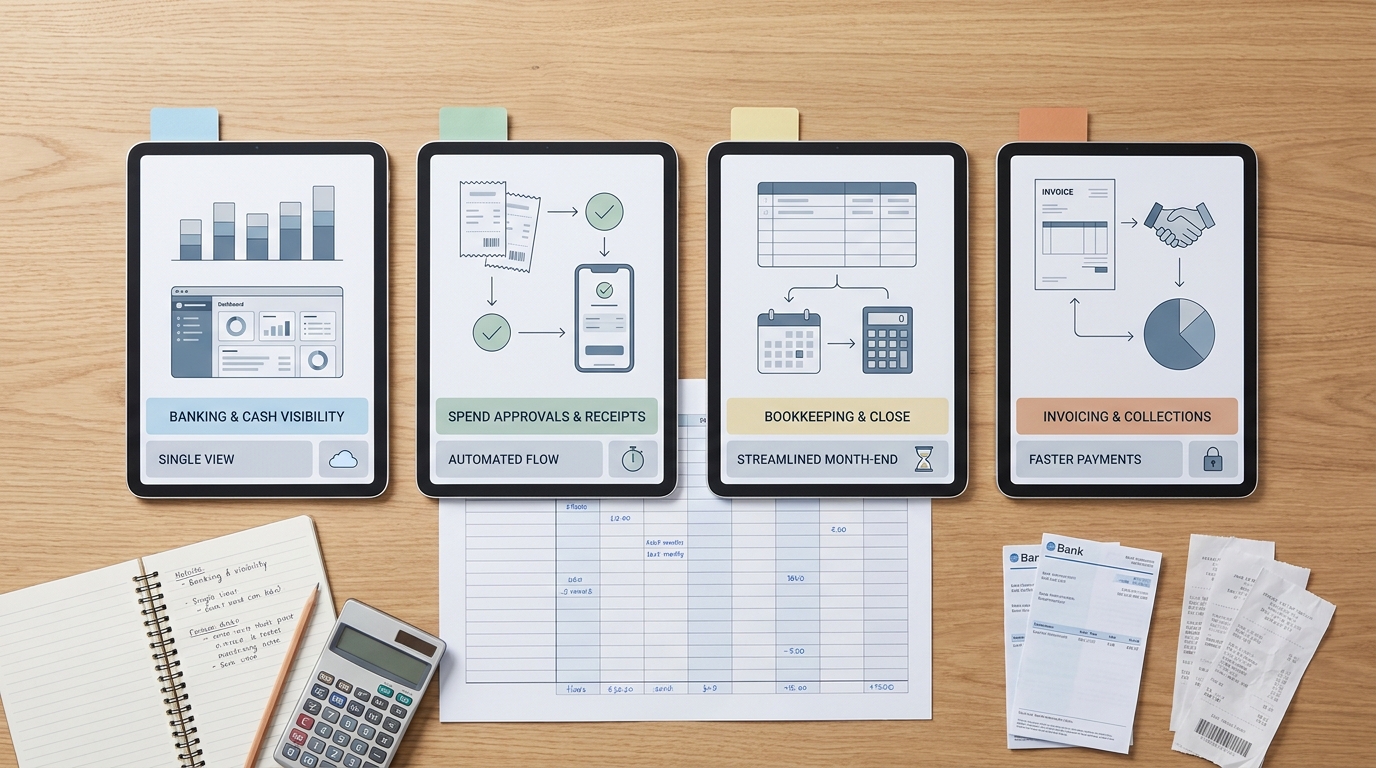
A compact comparison table showing each rising finance app alongside its main founder use case, strongest workflow benefit, and most relevant limitation.
Pick the app that removes your biggest finance bottleneck first. A prettier dashboard does not help if your team still chases receipts or re codes transactions every week. The practical goal is a simple weekly view of cash, burn, and a short follow up list you can actually clear.
For tradeoffs, checklists, and edge cases, How Much Money Do Indie Apps Actually Make in 2026? rounds out this section.
Ranked finance app recommendations for founders
1) Mercury - Best for cash visibility you can check weekly
- Best for: founders who want a lightweight weekly cash check without building another spreadsheet.
- What it does in the workflow: organize cash (accounts and buckets), then push activity into your accounting tool for categorization and reporting.
- Operational detail: schedule a 15 minute Monday cash review (balance by account, upcoming payroll, large vendor payments).
- Tradeoffs and risks: it is not bookkeeping, and transfer timing can vary. If bank feeds go down or you are operating across entities and currencies, plan for manual checks and a slightly longer review.
2) Ramp - Best for expense control and team spend
- Best for: teams with software, travel, and ad spend that need guardrails and a cleaner receipt workflow.
- What it does in the workflow: issue cards, set policies, collect receipts, and export coded spend to QuickBooks Online or Xero.
- Operational detail: set approvals for new vendors and spend above a threshold, then review exceptions weekly (often 20-30 minutes once rules are tuned).
- Tradeoffs and risks: edge cases happen (refunds, split bills, multi month subscriptions). If policy adoption is weak, approvals get noisy and people route around the system, which creates cleanup later.
3) QuickBooks Online - Best for bookkeeping as your core ledger
- Best for: founders who need credible books for taxes, diligence, or a CPA handoff.
- What it does in the workflow: acts as the ledger. Connect bank feeds, reconcile transactions, and keep your chart of accounts consistent so reporting holds up.
- Operational detail: plan 2-4 hours to set up the chart of accounts and opening balances (longer for migrations), then 30-90 minutes a week to reconcile and clear uncategorized items.
- Tradeoffs and risks: feeds can drop or duplicate transactions, and auto rules need review. If you mix personal and business spend, expect extra cleanup or tighten the expense policy. If you are approaching an audit or tax filing, do not underestimate the burden of reopening prior months.
Honorable mentions (good, but not my first pick for most founders)
| Tool | Where it shines | Watch outs |
|---|---|---|
| Xero | Clean collaboration with many bookkeepers and apps | Some accountants prefer QBO; switching later can be annoying |
| Stripe Invoicing | Simple invoicing if you are already in Stripe | Less flexible for complex billing; AR still needs a weekly owner |
| Brex | Card controls and workflows for some teams | Eligibility and region support vary; switching cards later costs time |
10 Best No-Code Mobile App Builders This Year reframes the same problem with a slightly different lens - useful before you finalize.
How should founders choose the right finance app?

A checklist block for founders to validate bank connections, permissions, exports, region support, and accounting compatibility before subscribing to a finance app.
Choose by the problem you need to solve this quarter
- If runway is unclear, start with cash visibility and a weekly cadence, then connect it to bookkeeping.
- If receipts and cards are messy, prioritize spend controls and receipt capture to reduce close rework.
- If cash in is slow, prioritize invoicing and collections because timing can matter more than totals.
Check the operational details that matter in real startup finance work
- Confirm bank connections actually sync for your accounts and you have a CSV fallback when feeds glitch.
- Test exports into your ledger and confirm your CPA or bookkeeper is comfortable with the mapping.
- Verify roles and permissions so access matches responsibility (especially for contractors).
- Validate region support and rails (ACH, local transfers, cards, currencies). Product pages can lag reality.
- Be honest about dependencies: rev rec, multi-entity, and multi-currency usually require process plus professional review, not just software.
Two failure modes I see a lot:
- No owner for the exception queue: receipts, reimbursements, and uncategorized spend pile up until close becomes painful.
- A rushed migration: importing historical transactions without a clear chart of accounts can create months of rework, especially around taxes and investor reporting.
Checklist to validate before you subscribe:
| Check | What to verify in a trial |
|---|---|
| Bank sync | Stable refresh, correct balances, no duplicates |
| Exports | Clean mapping to your chart of accounts |
| Roles | Approval, view only, and admin boundaries |
| Workflow | Exceptions for refunds, reimbursements, and subscriptions |
| Support | What happens when a feed breaks (time to response, workarounds) |
When a founder should combine two apps instead of choosing one
All in one tools reduce logins, but specialized stacks often win on control. Pair a spend tool (Ramp) with bookkeeping (QuickBooks Online or Xero) when you need guardrails and clean reporting. Pair invoicing (Stripe Invoicing) with a bank and cash view (Mercury) when collections timing drives hiring decisions.
Audit your current finance stack
List every place money moves (bank, card, invoicing, payroll) and where the ledger lives, then mark the biggest weekly pain point.
Run the audit
Get a founder friendly shortlist for your exact stack
Tell us your stage, bank, ledger (or lack of one), and where money currently breaks, and we will recommend a realistic setup path with tradeoffs.
Get the shortlist
What do founders ask most about finance apps?
Do I need an all in one finance app, or a stack?
Most founders do better with a small stack: one tool to control spend and another to keep the ledger clean. All in one platforms can be convenient, but they often trade depth in accounting, controls, or reporting.
What should I prioritize first: bookkeeping, spend controls, or runway?
Start with the bottleneck that can hurt you this month: unclear cash, uncontrolled spend, or slow collections. Then connect everything to a core ledger (often QuickBooks Online or Xero) so numbers stay consistent.
How can I trial a finance app without risking my books?
Run it in parallel for one close cycle if you can, and prefer read only connections at first. Test exports into your ledger and pay attention to exceptions like refunds, reimbursements, and chargebacks.
What are realistic setup and maintenance expectations?
Plan 2-6 hours for initial setup and another 1-3 weeks of cleanup if you are fixing old data, migrating, or changing policies. Ongoing maintenance is typically 15-60 minutes a week, but it spikes during month end close or when feeds break.
When should I bring in a CPA or fractional finance lead?
When you are fundraising, adding rev rec complexity, expanding internationally, or repeatedly reopening prior months. Software helps, but judgment, policy, and review still matter.