
This note explains how to reduce App Store Guideline 4.3 rejections by consolidating near-identical apps or producing reviewer-verifiable runtime differences. Expect a short, practical playbook with reviewer-friendly artifacts and realistic time estimates so you can cut repeat rejections and launch delays.
How can I detect early 4.3 signals?
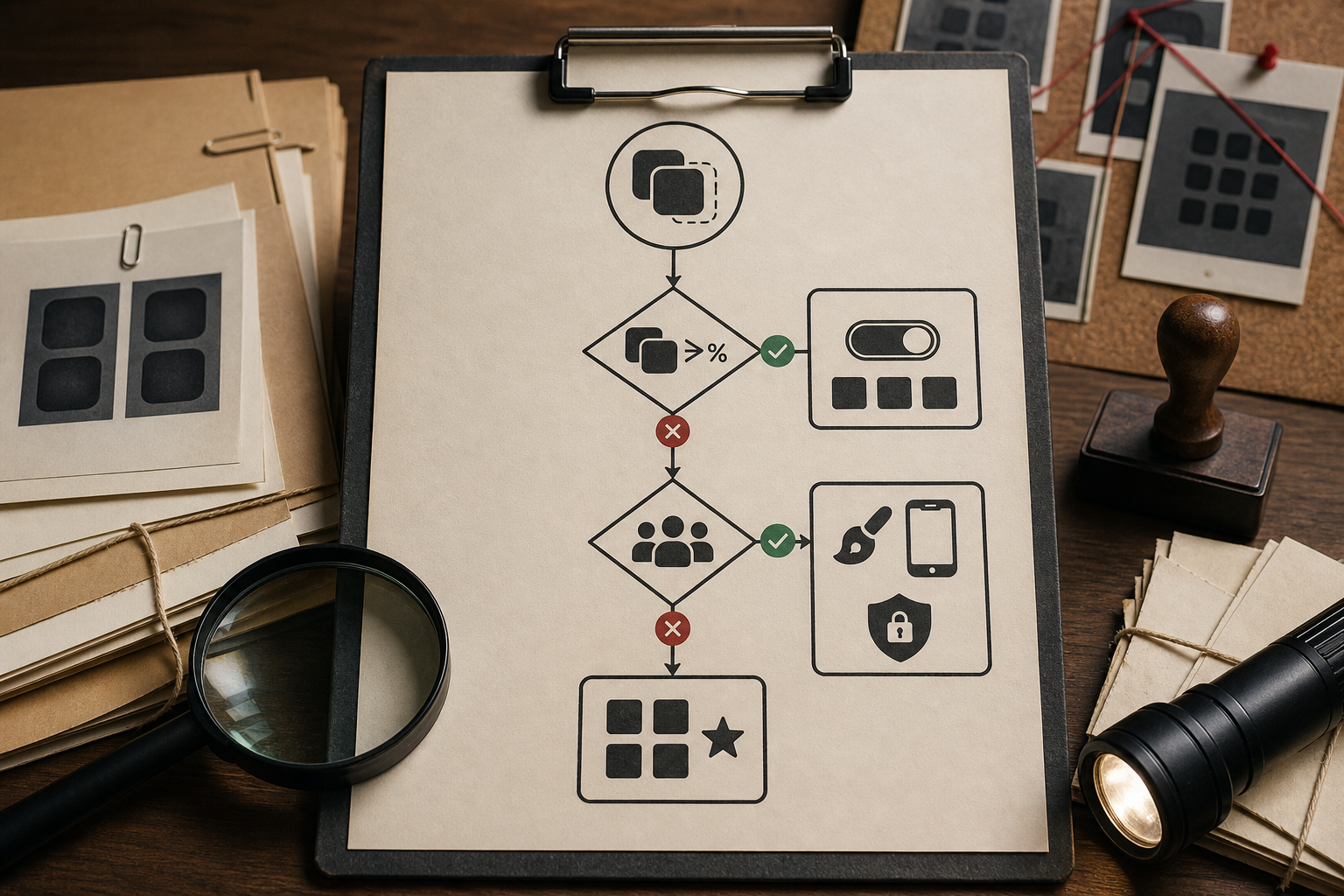
A compact decision flow diagram that maps 'feature overlap >70%' → 'consolidate with feature flags', 'customers require separate branding' → 'implement theming/MDM', and 'unique functionality exists' → 'document and attach proofs to submission'.
Category: Risk
Statistic: 29%
Label: Avoidable rejections
Context: Tied to metadata or policy gaps
Category: Signals
Statistic: 3 phrases
Label: Common rejection wording
Context: “spam”, “multiple similar apps”, “repetitive content”
Category: Speed
Statistic: 48 - 72 hrs vs 5 - 10 days
Label: Typical review turnaround
Context: Escalations often follow suspected 4.3 spam patterns
These reviewer signals and typical delays form a reproducible pattern you can detect and act on quickly.
| Signal | Example reviewer text or pattern | Practical impact |
|---|---|---|
| Common rejection wording | "We found multiple apps that are substantially similar or provide minimal user value" | Treat this wording as a likely blocker - revise product or metadata before resubmitting. |
| Typical review delay | Normal review 48-72 hours; escalations 5-10 days when flagged | Expect 1-2 extra weeks if you iterate after repeated rejections. |
| Trigger events to watch | 2+ similar rejections across bundle IDs | Consolidation is often faster than repeating metadata-only tweaks. |
Explanation: capture exact Resolution Center text, count matches across bundle IDs, and timestamp each event so you spot a pattern instead of guessing.
Interpretation: two or more matching rejections is a pragmatic trigger to change approach.
Reader impact: following a consolidation-or-differentiate rule usually saves several hours to a few weeks of review churn per launch and reduces maintenance overhead.
Should I consolidate clones or publish separate apps?
Consolidate identical apps into one binary or add demonstrable runtime differences reviewers can verify; this usually reduces review friction and maintenance overhead. The tradeoff is upfront engineering time versus fewer review delays, lower support cost, and simpler App Store management.
Why this matters now: multiple clones multiply QA, crash triage, and App Store Connect overhead and can dilute paid acquisition performance. Repeated rejections create unpredictable delays that compound when launches need coordination.
Practical tradeoffs and owners: small changes like server-driven theming or feature flags typically take 1-2 weeks of focused engineering work for a simple app; deeper refactors take multiple sprints and require PM and engineering alignment. Appeals and escalations can add 1-3 weeks and are not guaranteed; treat them as a contingency, not a plan.
Anticipated objections and realistic responses:
White-label or legal requirements
If a contract truly requires a separate binary, document the contractual or technical constraint and expect longer review times and more manual scrutiny. Owner: legal + PM; time: vary by case.
ASO or brand arguments
Separate listings can increase keyword coverage but raise maintenance and duplication risk. Run a combined-listing experiment for 4-8 weeks before committing to multiple stores.
Speed-to-market
Cloning is faster initially. Expect ~1-2 weeks to add server-driven theming or flags for a small app; that effort can reduce repeated review cycles and long-term support costs. Owner: engineering + product.
Note: reviewer judgment is subjective and policy evolves, so even careful submissions can be rejected; keep records and a response plan.
A complementary angle worth comparing lives in What the App Store Review Team Actually Tests.
How does Apple detect and enforce Guideline 4.3?
Apple looks at metadata, screenshots, bundle IDs, and reviewer notes to find duplication; you can instrument for these signals and prepare evidence that makes uniqueness obvious. The practical move is to make it easy for a reviewer to confirm what makes your app different.
Reviewer signals and common wording
Expect messages mentioning "spam", "minimal user value", or "substantially similar apps". If the issue is metadata-only (same screenshots or descriptions), change store assets first. Treat two or more pattern-matching rejections as the operational trigger to consolidate or materially change product and metadata.
Submission artifacts that move reviewers
| Artifact | Why it helps | Typical prep time |
|---|---|---|
| Notes for Reviewer | Gives a low-effort demo path for uniqueness | 15-60 minutes |
| Demo video | Shows the core, unique flow reviewers must verify | 1-3 hours for a 30-60s clip |
| Annotated screenshots | Calls out native integrations and unique UI | 30-90 minutes |
The implication: a few focused hours on clear artifacts often shortens back-and-forth and reduces escalations, but it does not guarantee acceptance.
Tactical playbook: exact steps to reduce 4.3 risk

A compact checklist block listing 'Notes for Reviewer sample text', 'Demo video required', 'Annotated screenshots', 'Demo credentials', 'Analytics proof (active users)', and 'Escalation doc ready'.
Run this prioritized checklist inside one sprint to lower the chance of a 4.3 rejection.
Decide: consolidate or meaningfully differentiate
List shared screens and core flows. If more than ~70% overlap, plan to merge or add server-driven differences. Document customer constraints and a rough engineering estimate (hours or days). Owner: PM + engineering; time: 1-3 days to decide.
Build reviewer-relevant technical changes
Implement server-side feature flags, theming, or replace thin webviews with native integrations so one binary covers multiple customers. Small apps can often do this in 1-2 weeks; larger platforms may need multiple sprints. Risk: require API work, testing, and coordination with QA.
Prepare submission artifacts
Add concise Notes for Reviewer with a 3-step demo path and test credentials, record a 30-60s demo video, and upload annotated screenshots. Allocate 2-6 hours to assemble these materials and be prepared to respond to follow-up questions within 24-48 hours. Owner: PM or designer + engineer.
If rejected, escalate with evidence
If you see repeated pattern rejections, make a one-page diff showing tangible changes, attach demo artifacts, and request escalation. Appeals sometimes work but are inconsistent; budget 1-3 weeks for escalations and avoid relying on appeals as first resort.
How to Fix App Store Guideline 5.1.1 Privacy Rejection reframes the same problem with a slightly different lens - useful before you finalize.
Conclusion
Apple's 4.3 enforcement forces a product-level tradeoff: support multiple binaries and accept ongoing review overhead, or invest a focused engineering sprint to consolidate and reduce future friction. In practice, expect a modest engineering cost (1-2 weeks for simple apps) plus a few hours of reviewer-focused assets to lower repeated rejections, but prepare for policy changes and some appeals to fail. Keep careful records of reviewer messages and contractual constraints to speed later escalations.


