If your indie mobile game is struggling to keep players coming back, the issue is rarely content volume and more often the reward loop that makes returning feel worth it. Most reward mechanics fall into a few proven models, but each comes with real tradeoffs in UX, revenue quality, support load, and long-term retention. Below are five models worth studying so you can pick what fits your genre, team capacity, and monetization plan.
The Rise of Solo App Founders - How One Person Can Compete goes deeper on the ideas above and adds concrete next steps.
What changes when you add or tune reward loops?
Below is a directional snapshot from small indie projects I worked on plus a handful of public, teardown-style audits and peer reviews. This is qualitative, and the sample is small (think a few games and 1-2 cohorts per change), so treat it as a pattern to test, not a benchmark.
| Change we shipped (small scope) | What we measured | Typical direction (not guaranteed) | What usually caused misses |
|---|---|---|---|
| Added one rewarded placement (revive or speed-up) | Opt-in rate, ARPDAU, D1 | Opt-in and ARPDAU up; D1 flat to slightly down | Overexposure, rewards too strong, bad timing |
| Added lightweight daily missions (3-5 tasks) | D7, sessions per user | D7 and sessions up if missions match core loop | Missions feel like chores, rewards misbalanced |
| Added streak with 1 grace day | D7, reviews | D7 up; reviews stable if grace is clear | Harsh resets, unclear rules, naggy UI |
What this shows: reward systems often create a measurable shift, but the shift is usually a trade. How to interpret it: budget time for tuning frequency, reward value, and UI clarity, not just shipping code. Reader impact: pick one model, ship a minimal version, then decide with data instead of stacking five systems and guessing what mattered.
When you move from outline to execution, How Much Money Do Indie Apps Actually Make in 2026? helps close common gaps teams hit here.
Which 5 reward app models should indie game founders study?
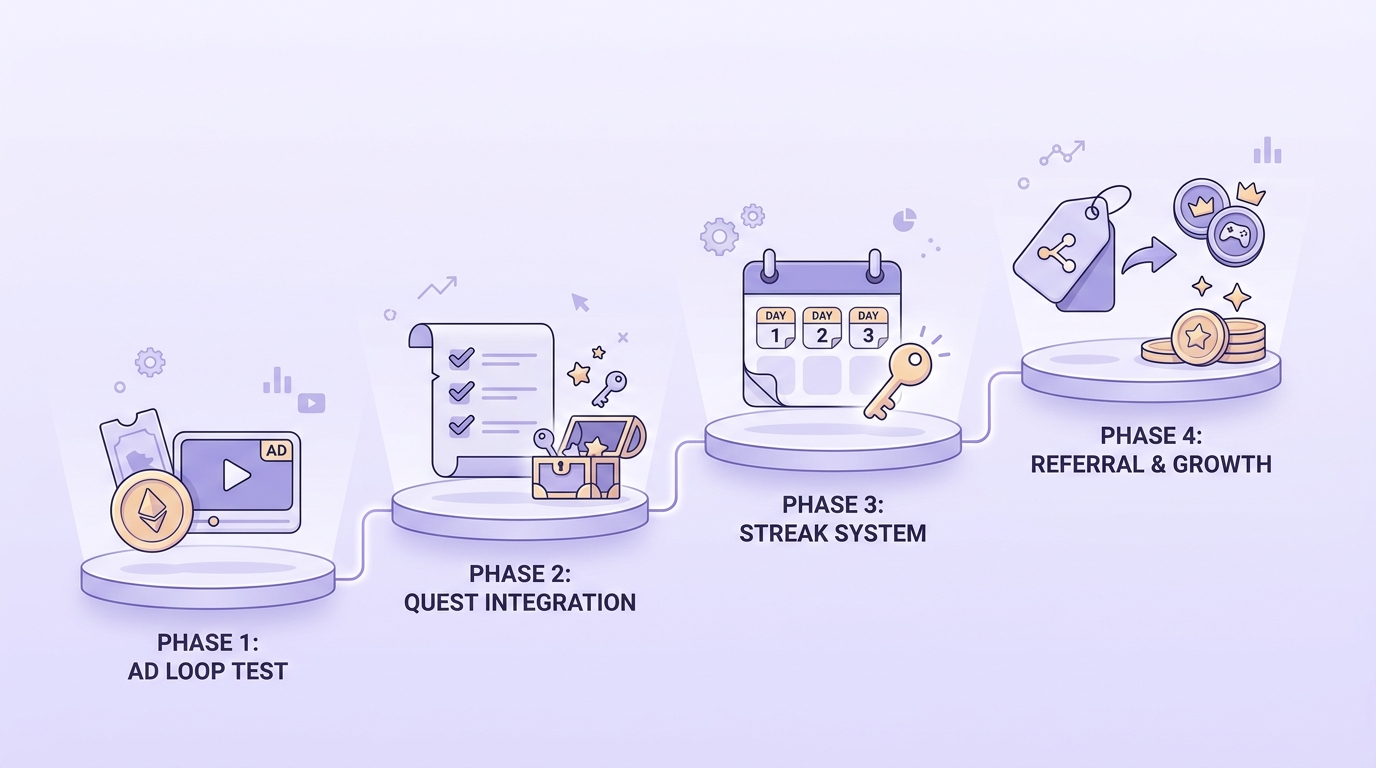
A simple rollout timeline showing how an indie studio could test rewarded ads, then add quests, then layer streaks or referrals as the game proves retention and economy stability.

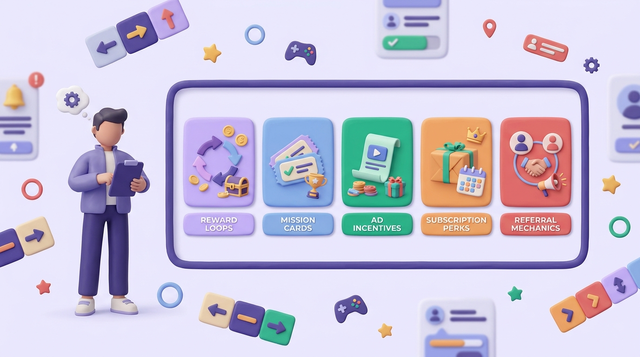
A compact comparison grid of the five reward app models, showing best fit, primary goal, and key tradeoff for indie game founders deciding what to study first.
1. Rewarded ad loop models
- What it is: An opt-in trade: watch an ad, get a clear in-game benefit (soft currency, extra life, speed-up, cosmetic roll).
- Why it ranks high: It is often the quickest paid-signal test if you already have obvious pain points (retries, timers, energy).
- Real effort: Commonly 2-10 days depending on SDKs, mediation, analytics events, placement UI, and store review timing. Plan another 1-2 weeks to read cohort results with enough volume to trust the direction.
- Constraints: Ad fill and eCPM vary by geo and season, so revenue can swing without gameplay changes.
- Failure mode: Too many prompts can reduce trust and hurt retention because players feel slowed down or manipulated.
- Reference: https://www.applixir.com/blog/rewarded-ads-vs-interstitials-for-web-games-retention-ltv-and-revenue-at-scale
2. Mission and quest reward models
- What it is: Daily tasks, onboarding missions, and milestone challenges that pay out currency, items, or unlocks.
- Why it can work: Missions create reasons to return without a full content expansion, and they can improve tutorial completion and session frequency when aligned to the core loop.
- Real effort: 1-2 weeks for a basic system (UI, task logic, reward claims), then ongoing tuning. Balance time, copy, and edge cases (what if the player completes a task offline?) usually take longer than the first build.
- Failure mode: If tasks push off-loop behavior or repeat too much, players churn faster because it feels like homework.
- Reference: https://www.gameinsights.ai/research/mobile-game-benchmarks-2026
3. Streak and loyalty reward models
- What it is: Consecutive-day logins, loyalty tiers, and return bonuses that build a habit.
- Why it can work: Fits short sessions and pairs well with missions by giving players a second reason to check in.
- Tradeoff: Harsh resets create backlash. Grace days, catch-up, or soft decay reduce anger, but also reduce urgency, so the lift can be smaller.
- Failure mode: Players who miss a day sometimes quit entirely if they feel they "lost progress" outside the core game.
4. Subscription perks (VIP, battle pass style perks)
- What it is: A recurring paid tier that delivers steady value: currency drip, QoL boosts, extra inventory, ad removal, pass progression, or exclusive cosmetics.
- Why it can work: Subscriptions can smooth revenue volatility when your long-term progression is already sticky.
- Real constraints: Often 2-6 weeks including paywall UX, entitlement handling, restore purchases, and support readiness (refunds, missing perks, angry emails).
- Failure mode: Perks that feel pay-to-win can lift short-term revenue while hurting ratings and community trust, which is slow to earn back.
- Dependency: You need a plan to keep value fresh without creating permanent live-ops debt for a small team.
5. Referral rewards (invite loops)
- What it is: Reward the inviter (and ideally the invitee) when a new player installs, activates, and hits a meaningful milestone.
- Why it can work: If social play is native, referrals can become a low-cost acquisition channel and improve retention via friend ties.
- Tradeoff: Weak in solo-first games, and many players will not invite anyone until the game already feels worth sharing.
- Failure mode: Fraud and incentive abuse. You will need milestone design, basic detection, and realistic expectations about invite volume.
- Dependencies: Needs enough DAU for invites to matter, plus attribution that behaves across devices and platforms.
A complementary angle worth comparing lives in Best 5 App Analytics Tools for Mobile Founders.
How do you choose the right reward model for your indie game?
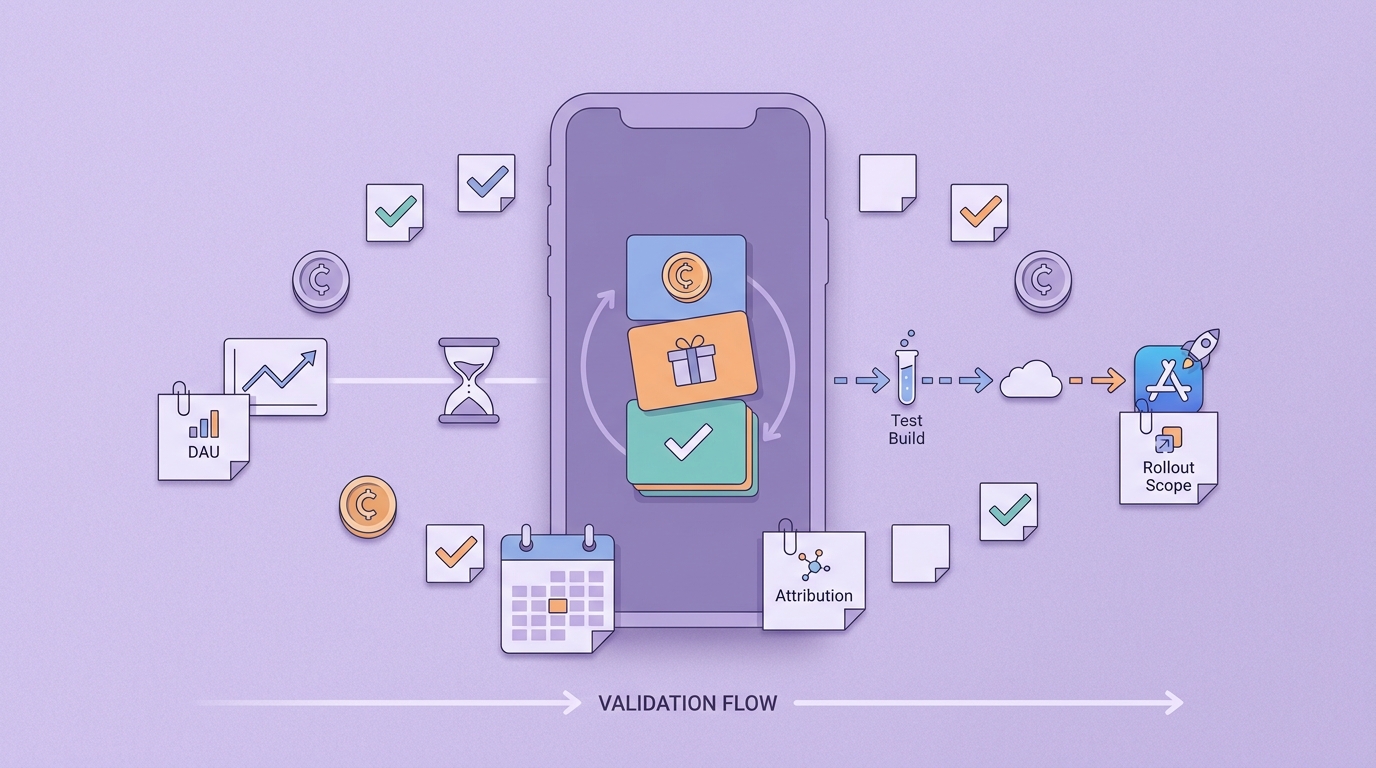
A pre-launch checklist for validating reward value, reward cost, and tracking before an indie game founder ships a new reward model to App Store or Google Play.
Match the model to your loop and your ops budget
Short-session arcade, puzzle, and roguelite
Start with one rewarded placement and a lightweight streak. Budget time for tuning so ads feel like a choice, not a tax.
Progression-heavy idle, RPG, and builder
Lean on quests and missions that teach systems and pace milestones. Expect balancing and economy inflation control to be the bottleneck, especially with multiple currencies.
Social-first or live-ops ready teams
Add subscriptions only when you can sustain value without breaking fairness. Test referrals only when sharing is already a natural behavior (clans, co-op, PvP rivals).
Check the economics before you ship
- Validate reward value against inflation, ad fill variability, and scarcity of premium items (https://www.applixir.com/blog/rewarded-ads-vs-interstitials-for-web-games-retention-ltv-and-revenue-at-scale).
- Pick one primary success metric per model (and one guardrail):
- Rewarded ads: opt-in rate (guardrail: D1, reviews)
- Missions: D7 (guardrail: session length fatigue)
- Streaks: repeat logins (guardrail: review sentiment)
- Subs: conversion (guardrail: churn, refund rate)
- Referrals: activated invites (guardrail: fraud signals)
- Start with a segment or soft-launch geo, then expand after 1-2 cohorts if the tradeoffs look acceptable.
A practical "run it this week" workflow (tooling and metrics)
Instrument the basics (half-day to 1 day)
Track rewarded opt-in rate, ad ARPDAU, and D1/D7 retention in Firebase or GA4. Add events like
rewarded_offer_shown,rewarded_started,rewarded_completed,reward_granted.Ship one controlled experiment (1-3 dev days + review delays)
A/B one change at a time using Remote Config: for example, "revive offer" vs "no revive offer" for 50/50 of new users.
Read results like an operator (2-3 hours per check-in, over 7-14 days)
Look for tradeoffs: opt-in up but D1 down, or ARPDAU up but session length down. If the cohort is small, extend the test rather than forcing a conclusion.
Add guardrails (1-2 hours now, then ongoing)
Cap daily rewards, log suspicious repeats, and watch for exploits. One thing worth noting: ops issues are real here, like SDK policy changes, mediation bugs, economy inflation from overtuned rewards, and extra support load when players think they did not receive something.
Mid-article CTA: get support for packaging the right model
Froxi can help you map reward loops to launch readiness: what to ship first, what to measure, and what to avoid so you do not create hidden live-ops debt.
Explore Froxi support
Final CTA: sanity-check your reward plan before you build it
Share your core loop, economy, and current retention, and we will help you pick one reward model that is realistic for your team to ship, measure, and iterate over 2-4 weeks.
Work with Froxi
For tradeoffs, checklists, and edge cases, How Much Should You Charge for Your App in 2026? rounds out this section.